




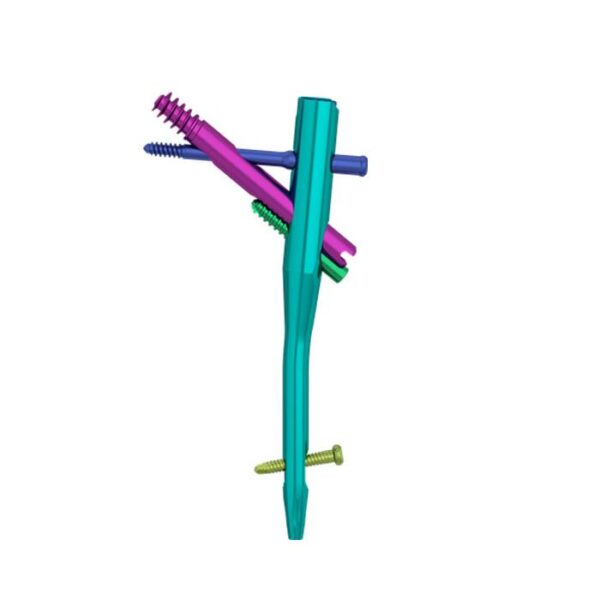


Le Clou Bionique Fémoral Proximal Double Medical a été développé conjointement sur la base du brevet original de la “ structure stable triangulaire ” de l’académicien Zhang Yingze et de la théorie de la “ reconstruction du point d’appui par effet de levier ” proposée par le professeur Zhang Dianying.
“Théorie de la ” reconstruction du point d’appui par effet de levier »
- L’anatomie de l’articulation normale de la hanche humaine est similaire à un système de levier. Le point d’appui est situé près du centre de la tête fémorale, le bras de levier du groupe de compression médial est plus court, et le bras de levier du groupe de traction latéral est plus long. Par conséquent, l’articulation de la hanche peut supporter un poids plus important et effectuer diverses actions.
- Le but de l’opération est d’établir un nouveau système de levier via le système de fixation interne pour remplacer le système de levier d’origine jusqu’à la consolidation de la fracture.
- La stabilité postopératoire de la fracture dépend du type de fixation et n’a aucun lien avec le type de fracture.
- Plus la position de reconstruction du point d’appui du nouveau système de fixation interne est proche du point d’appui anatomique et physiologique, plus la fracture postopératoire sera stable.
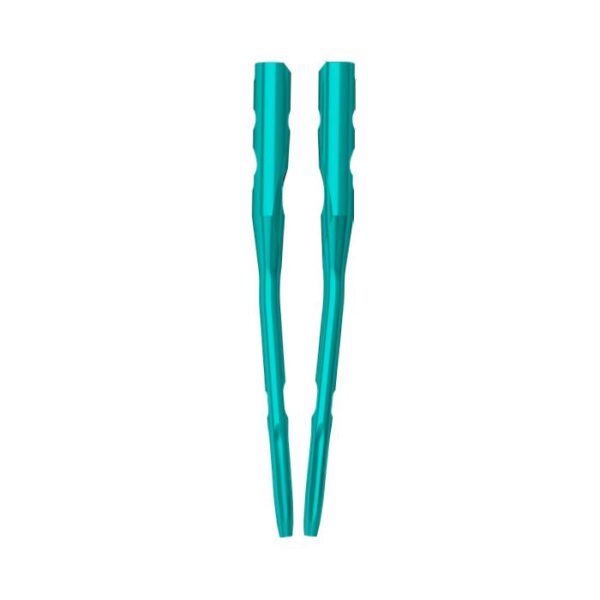
Clous :
- L’angle CCD de 130° offre davantage d’options pour différentes anatomies.
- L’angle médio-latéral de 5° permet une insertion à l’extrémité du grand trochanter.
- Conception à coupe plate latérale pour une insertion plus facile et une pression réduite sur la paroi latérale.
- Diamètre proximal plus petit pour la protection des tissus mous.
- Rainure longue distale de coupe pour disperser les contraintes et prévenir les fractures autour du clou.
- L’arc antérieur s’adapte à l’anatomie fémorale.
Grande vis de compression et vis de compression
- Vis de verrouillage par compression combinée unique : pressurisation continue pour éliminer l’effet “ Z ”.
- L’extrémité de la vis de compression : fixe le clou du côté médial de la cavité médullaire pour réduire la pression sur la paroi latérale.
- Structure d’engrenage : rotation contrôlable pendant la réduction assurant une pressurisation linéaire.
Vis de tension :
- Conception auto-taraudeuse facilitant l’insertion peropératoire.
- Tournevis Torx, réduisant le risque de desserrage de la vis.
Vis de verrouillage :
- Conception auto-taraudeuse facilitant l’insertion peropératoire.
- Conception de vis de verrouillage avec filetage double pour une insertion plus facile.
- Tournevis Torx, réduisant le risque de desserrage de la vis.
Bouchon d’extrémité :
- Augmente la fixation stable instantanée pour les fractures instables.
- Tournevis Torx, réduisant le risque de desserrage du bouchon d’extrémité.
Tige de visée :
- Fabriquée en matériau en fibre de carbone, légère et radiotransparente.
- Un seul gabarit pour l’insertion de la lame hélicoïdale et de la vis de verrouillage, sans nécessité de changer d’instruments en cours d’opération.
- Un fil guide peut être inséré à travers le trou de la tige de visée pour détecter l’angle d’antéversion fémorale et la profondeur du clou dans la cavité médullaire.
- Pour les fractures instables, deux orifices pour broches K sont prévus pour une fixation temporaire anti-rotation.
Indication :
- Fractures sous-trochantériennes basses et étendues
- Fractures trochantériennes ipsilatérales
- Fractures multifragmentaires (fémur proximal)
- Fractures pathologiques
Contre-indications
- Fractures de la diaphyse fémorale
- Fractures isolées ou combinées du col fémoral moyen